
Barbour County Arrest Warrants Explained
An arrest warrant is a judge's green light to take a named person into custody. In Barbour County, the Warrant Magistrate's Office casts magistrates as neutral judicial officers. They sit apart from the officers investigating the claim. The magistrate reads sworn facts. That review asks whether probable cause exists, meaning enough reliable facts to support a reasonable belief that an offense occurred and that the named person committed it. That is the whole threshold. Meet it, and a warrant may issue. The route depends on place and charge. A county misdemeanor starts with an incident report to the Barbour County Sheriff's Office. An investigator walks the complainant through the warrant request. A felony goes through the police agency with jurisdiction or the Sheriff. From there, an officer or investigator comes to the Circuit Clerk's Office. Ordinary Eufaula misdemeanors stay in Eufaula Municipal Court, unless a felony from the same event or an extraordinary circumstance pushes the matter onto the Barbour County path.
Barbour Arrest Warrant Path
A Barbour County warrant does not begin with a private citizen asking an officer for an arrest. The complainant files an incident or offense report first. The investigator reviews it. Where local rules require, the investigator also accompanies the complainant to the Clerk's Office. There the complainant is sworn and completes a deposition, unless an officer has already done so. A deposition is simply a sworn statement of the facts. The magistrate then weighs those facts independently before any warrant issues.
- Report the incident to the Sheriff's Office or the police department with jurisdiction.
- Work with the assigned officer or investigator on the complaint and sworn deposition.
- Present the supported facts to a neutral Barbour County warrant magistrate.
- Wait for the magistrate's probable-cause decision and the proper court process.
Filing a complaint this way costs nothing, the local court says. That covers the warrant application alone. Arrest, bond, copies, court costs, and later resolution can all carry fees. Barbour County publishes no countywide bond schedule. Ask the issuing court about the actual case. The Alabama Traffic Service Center shows a separate state court channel for eligible traffic matters.

That screen handles citations and payments. It is not a Barbour County arrest warrant roster, so keep the two record paths distinct.
Inside a Barbour County Arrest Warrant
Barbour County publishes no public arrest warrant listing, so no local warrant-number pattern or field set can be described. The Circuit Clerk notes that court records include warrants. Municipal ticket tools use citation or case numbers. A served warrant may sit in the court file. Treat any copy as an official court document. It does not guarantee that a public database shows every live Barbour County arrest warrant.
| Named person | Identifies the person the judicial order concerns; verify identity with the issuing office. |
|---|---|
| Charge or complaint | Connects the order to the alleged offense and underlying criminal case. |
| Issuing court | Shows which Barbour County court or magistrate controls the court record and next step. |
| Issue date | Marks when the judicial officer authorized the arrest process. |
| Service or return | May document execution after service; local sources publish no public status-code table. |
| Bond information | May be case specific. No local public arrest-warrant bond schedule was found. |
The stamp LOCAL FORMAT NOT PUBLISHED says it plainly: Barbour County posts no sample warrant number. Citation numbers and warrant numbers do not swap. The clerk or issuing court knows which identifier fits the file.
Barbour Unserved Arrest Warrant Limits
One local access rule stands out for its bluntness. Barbour County's court notice says an arrest warrant is not public record until it is served. An empty public search therefore proves little. The file may simply not be public yet. The tool may cover a different court, or the search may have hit the wrong record type. None of it is proof that no Barbour County arrest warrant exists.
Access limit: An unserved Barbour County arrest warrant is not public, so confirm a personal concern through the court and Sheriff.
Alabama residents hold a right under the Alabama Open Records Act to inspect and copy public records. Laws that make records nonpublic still control. Youthful-offender records carry their own confidentiality rule. Juvenile law enforcement files get protection too. Put those statutory limits beside the served-versus-unserved rule, and court-file access stops looking like a full current warrant search. The state statute image documents the broader access law that applies to Barbour County records.
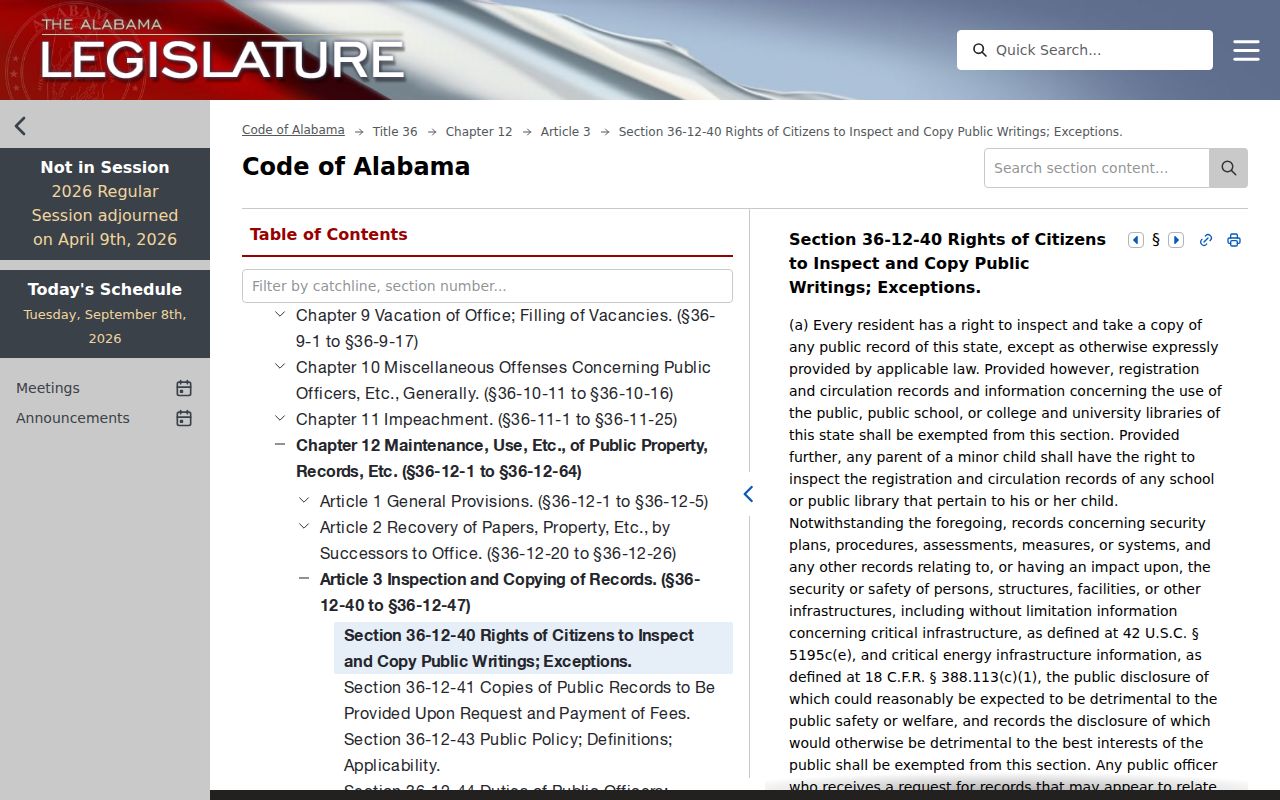
That law works alongside court rules and confidentiality limits in Barbour County, not as an override of the unserved-warrant restriction.
Serving Arrest Warrants in Barbour County
The Barbour County Sheriff's Office sits at the center of arrest warrant service here. Its published duties run from patrol and criminal investigations to the jail, civil process, and courthouse security. The office posts no separate warrant squad, no dedicated warrant phone line, and no formal surrender appointment system. Its warrant page gives one clear direction: if you believe an arrest warrant exists, appear at the Sheriff's Department in person. That step is the county's own answer, not a guess. What happens after service varies. Service means lawful execution of the arrest order, and Alabama Rule of Criminal Procedure 4.1 governs arrest procedure and the limited traffic custodial-arrest circumstances. Custody can follow, along with a first court process and a bond decision. No published Barbour County booking timetable or guaranteed bond procedure exists, so confirm those facts for the actual case. City cases take a different route. Eufaula Police Department cases in Eufaula Municipal Court stay on that city route when they involve misdemeanor traffic, nontraffic, or ordinance matters, so a municipal clerk is the right call there. County and federal service remain separate tracks. The U.S. Marshals Service Middle District office adds a federal and cross-jurisdiction layer that includes Barbour County, though it is not a public portal for county or municipal cases.
Barbour Sheriff Arrest Warrant Contact
The Barbour County Sheriff's Office sits at 24 Robertson Airport Drive, Clayton, Alabama 36016. The main number is 334-775-3434, and posted hours run Monday through Friday, 8 a.m. to 5 p.m. Treat it as a general line. The sheriff publishes no warrant-status hotline, so a caller should ask what identification, attorney coordination, or appearance process the office currently requires.
Barbour County Sheriff's Office
County law enforcement, jail, service, and the local in-person direction for a suspected Barbour County arrest warrant.
334-775-3434
Barbour County Circuit Clerk
Official record keeper for Circuit and District Court proceedings, including criminal and warrant records after applicable access limits.
334-687-1515 or 334-775-8366
Court-file questions can also go to the Circuit Clerk. The Eufaula office sits at 405 East Barbour Street, Suite A119, while Clayton clerk service is at One Court Square. The clerk can route a known case division. The office is not advertised as a live warrant-clearance service, though, so the Barbour County question still runs through the issuing court or sheriff. Note: The Sheriff's confidential tip form reports information; it does not check whether a Barbour County arrest warrant exists.
Comparing Arrest, Summons, and Bench Warrants
Alabama Rule of Criminal Procedure 3.1 draws the line between an arrest warrant and a summons. After an indictment or a probable-cause finding, a judge or magistrate issues one or the other. A summons works only in narrow conditions. The person must not be in custody, the charge must be bailable as of right, and there must be no reason to expect the person will ignore it. When the summons goes unserved or the person skips it, a writ of arrest follows. That is how a missed paper becomes a real arrest order in Barbour County.
| Process | Why it starts | Required response |
|---|---|---|
| Arrest warrant | Probable cause or indictment supports taking the person into custody. | Confirm the issuing court and plan the lawful response, often with counsel. |
| Summons | The court directs the person to respond without immediate arrest. | Appear as ordered and address the charge. |
| Bench warrant | A person misses court or fails to meet a court duty. | Contact the issuing court about appearance, recall, and any bond terms. |
A Barbour County arrest warrant traces back to the alleged offense and probable cause. A bench warrant usually follows a missed court obligation instead. For the missed-court route, see the Barbour County bench warrant search.
Barbour Arrest Warrant Rule 3.1
Alabama Rule of Criminal Procedure 3.1 sets the statewide fork that Barbour County judges and magistrates apply. They act after an indictment, or after probable cause is found from a complaint, affidavit, or testimony. The rule shows why a sworn local deposition carries weight. A police report alone is not the final judicial decision.
- Probable cause
- The fact-based legal threshold the neutral magistrate assesses before issuing an arrest warrant.
- Deposition
- The sworn account completed by a complainant unless law enforcement has already supplied it.
- Summons
- A court command to respond without immediate arrest in the conditions Rule 3.1 permits.
- Writ of arrest
- The process required when a summons cannot be served or the summoned person fails to appear.
The state criminal rules index provides the broader warrant, execution, return, and bond framework.
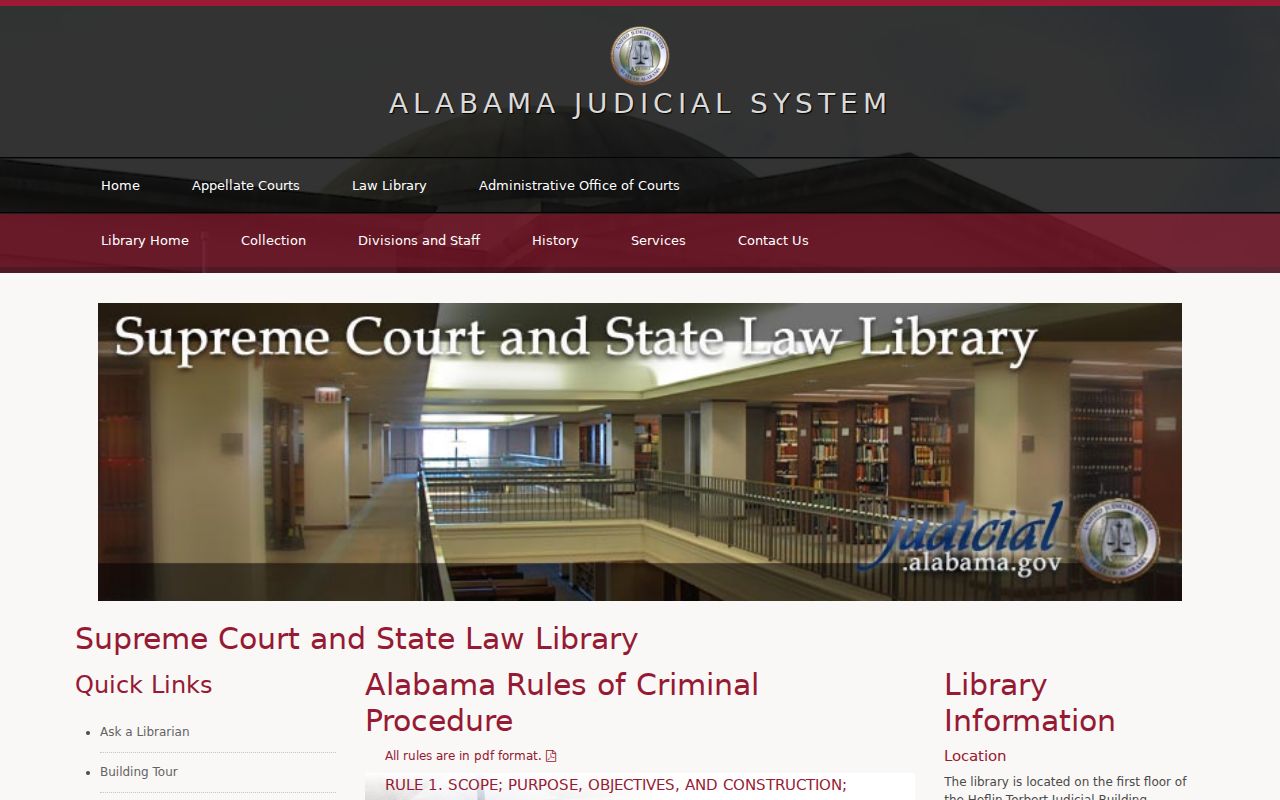
The index helps locate the controlling rule. The Barbour County magistrate notice gives the local report and office route.
If There's an Arrest Warrant for You
Start with the likely issuing agency and court. Call the Sheriff's general line and the Circuit Clerk, or the municipal clerk if the matter arose inside a city. Ask how the office confirms a personal case, whether an attorney may coordinate, what identification is needed, and where any appearance must occur. Barbour County's published direction is in person at the Sheriff's Department. The county supplies no one-size-fits-all surrender plan.
Important: Seek legal advice before a voluntary appearance so the warrant, bond question, and underlying Barbour County case can be addressed together.
An attorney can identify the case, speak with the issuing court, and lay out the risks of surrender or arrest before anything else happens. Never assume that payment, posting bond, or filing a motion clears every duty on its own. Barbour County publishes no warrant-recall form, bond schedule, guaranteed walk-through, or posting fee. A motion to recall or quash simply asks the court to withdraw or set aside the order. Whether that option is open depends on the case and the judge. Keep copies of every filing, receipt, release paper, and new court date. Then confirm status with the issuing clerk. No published update schedule governs how fast a served or recalled Barbour County arrest warrant leaves a court system, so a written confirmation matters.
Barbour Arrest Warrant Confirmation Steps
A message, an old case, a missed summons, or a family report should never be treated as final. Treat third-party searches the same way. The county posts no official countywide name roster. Just One Look offers case-by-case trial court access. Alacourt is a subscription read-only system. Alabama has no public statewide name-searchable warrant database, and none of these tools claims to be a complete live Barbour County arrest warrant list.
- Write down the event, date, agency, city, citation, or known case number.
- Identify Circuit Court, District Court, or the municipal court that would hold the case.
- Call the correct clerk and Sheriff's Office for their current personal-confirmation process.
- Use counsel to plan appearance, bond, or a possible court request when risk is unclear.
- After action, verify the file and all future dates with the issuing court.
The County Commission records procedure requires an in-person form and proof of Alabama residency for records in Commission custody. It is not a court or sheriff warrant request. The full county process and office split appear on the Barbour County warrant records home. The central point stays local: a search result never replaces issuing-court and Sheriff confirmation, especially before service.